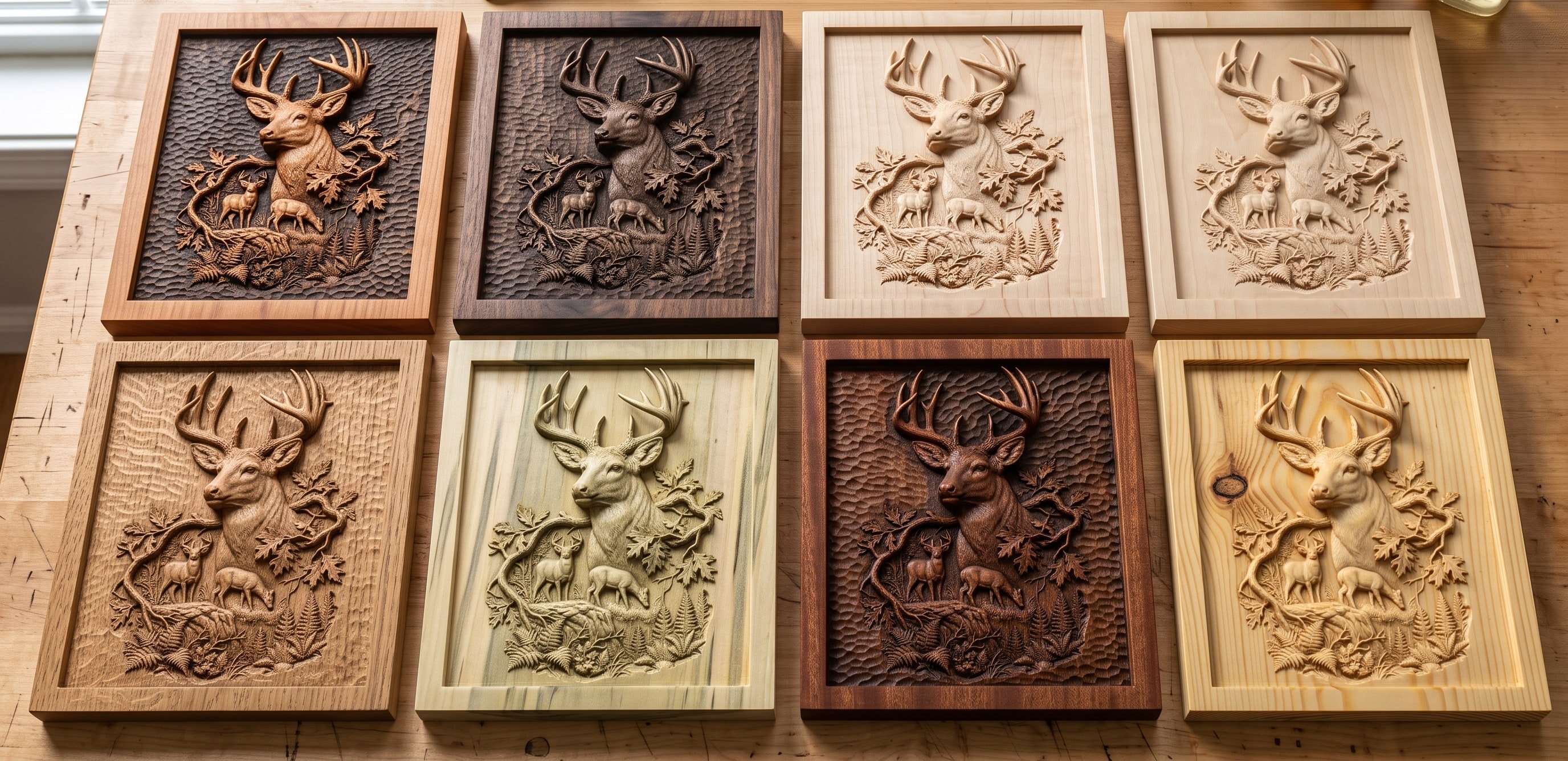
Every guide to relief carving says "use cherry or walnut" and then moves on, and nobody ever shows you why. So we did the obvious thing. We carved the same design, the Whitetail Buck and Forest Scene Bas-Relief STL Carving, in eight species, oiled every one of them the same way with no stain and no glaze, and put them in a row.
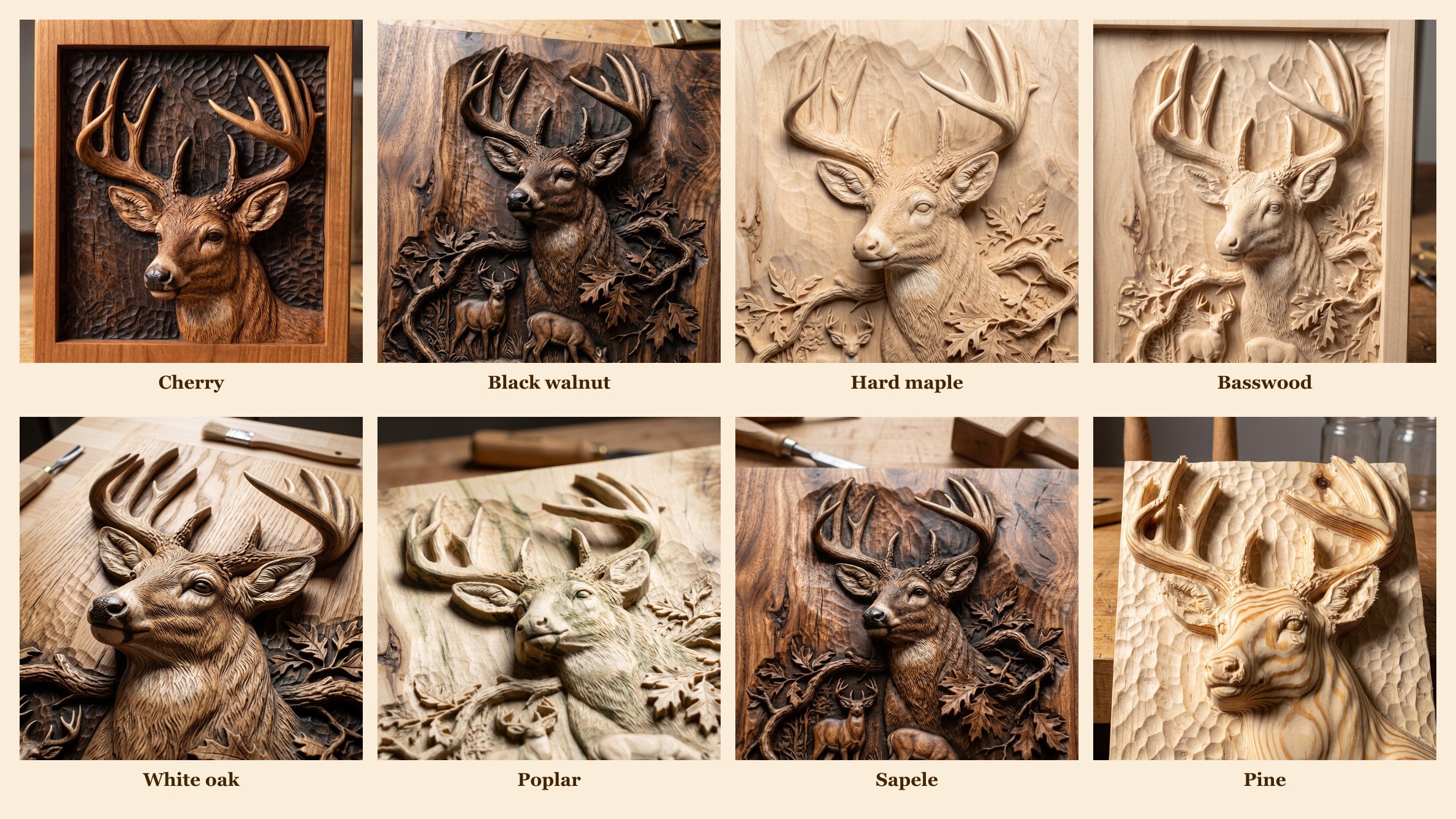
The differences are bigger than anyone expects. Maple holds hair lines that basswood softens into suggestion. White oak's grain runs straight through the deer's face like a bad tattoo. Pine tears out at every antler tip. And cherry, which costs a third of what walnut does, holds nearly everything walnut holds and darkens for the rest of its life into something better.
In this guide
- What actually matters in a carving wood
- All eight, side by side
- Cherry
- Black walnut
- Hard maple
- Basswood
- White oak
- Poplar
- Sapele
- Pine
- Others worth knowing: alder, mahogany, MDF, plywood
- The table
- Buying boards for carving
- Questions people ask
What actually matters in a carving wood
Furniture makers judge wood on strength and stability. A relief carver judges it on four things, and none of them is strength.
- Grain fineness. A cutter slices cleanly through fine, even fibres and tears coarse ones. Fine-grained woods hold a crisp edge on a 1 mm feature; coarse ones fuzz it.
- Grain loudness. A carving is a picture. If the board has its own picture, big open pores, bold growth rings, ray fleck, the two fight, and the board usually wins. The quieter the grain, the more the design shows.
- Blotch risk. Some species take stain evenly; some drink it in patches. This decides how you finish, not whether you can carve. Sealing before colour fixes most of it.
- Hardness, in a narrow band. Too soft and the fine detail crushes and fuzzes; too hard and it burns under a dull bit and takes forever to rough. The sweet spot is roughly cherry to hard maple.
Colour comes last, because you control it with finish. Everything else is decided the moment you pick up the board.
All eight, side by side
Cherry
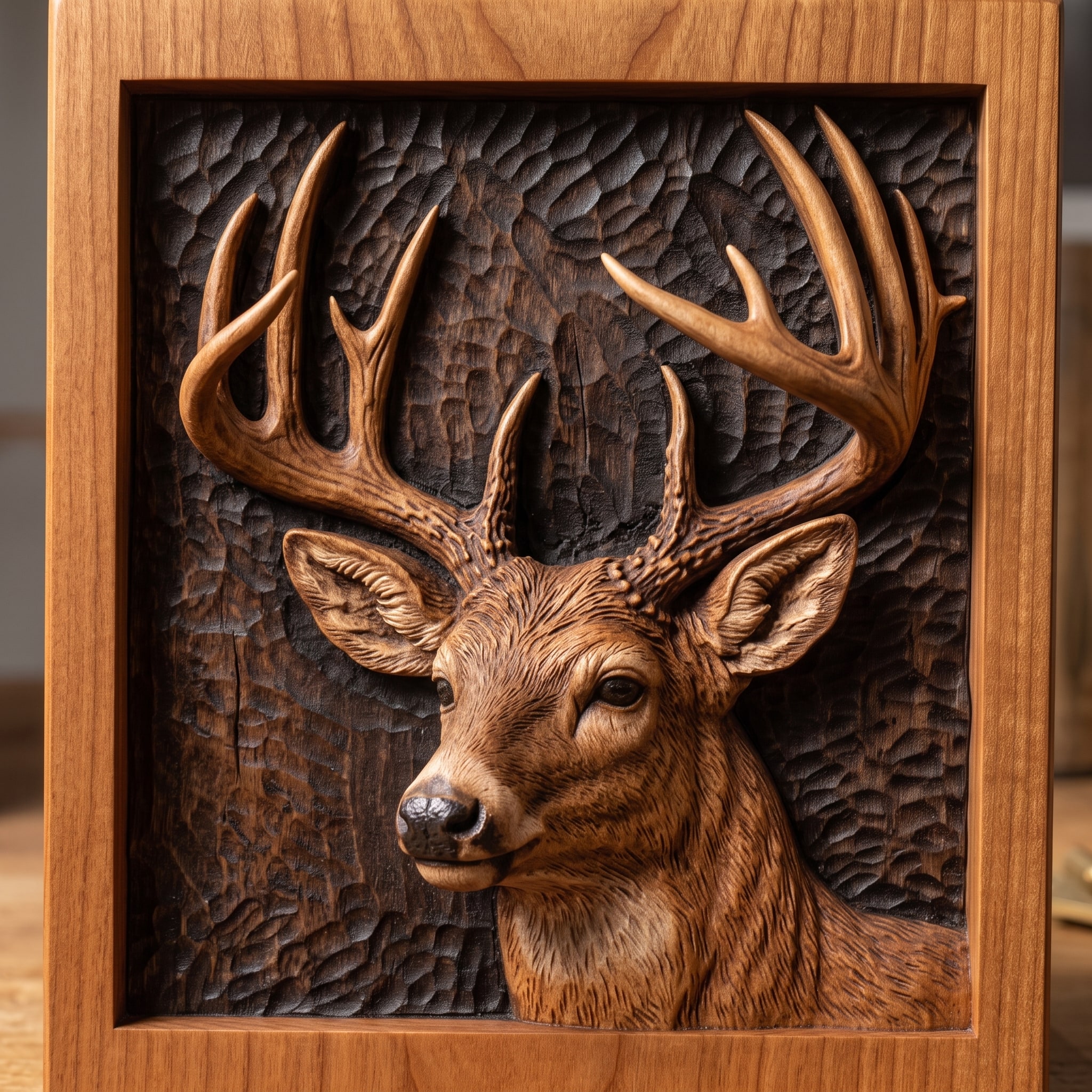
If you only ever buy one species for relief work, buy cherry. It carves cleanly, it holds detail nearly as well as maple, its grain is fine and quiet, and it takes oil like nothing else. It also does something no other wood on this list does: it darkens with light, from a pale salmon when freshly cut to a deep reddish brown over a year or two, so the carving improves on the wall.
- Detail: excellent. Hair, feathers and lettering all hold at a 1 mm cutter.
- Grain: fine and quiet. Occasional gum pockets, which show as small dark flecks and are part of the charm.
- Blotch: high with pigment stain. Seal first, or skip stain and let oil and time do the colour.
- Cost: moderate. Usually a third to half the price of walnut.
- Finish: oil, then wax. The house finish in every photograph on this site is cherry with a dark glaze in the recesses; the finishing guide is built around it.
Black walnut
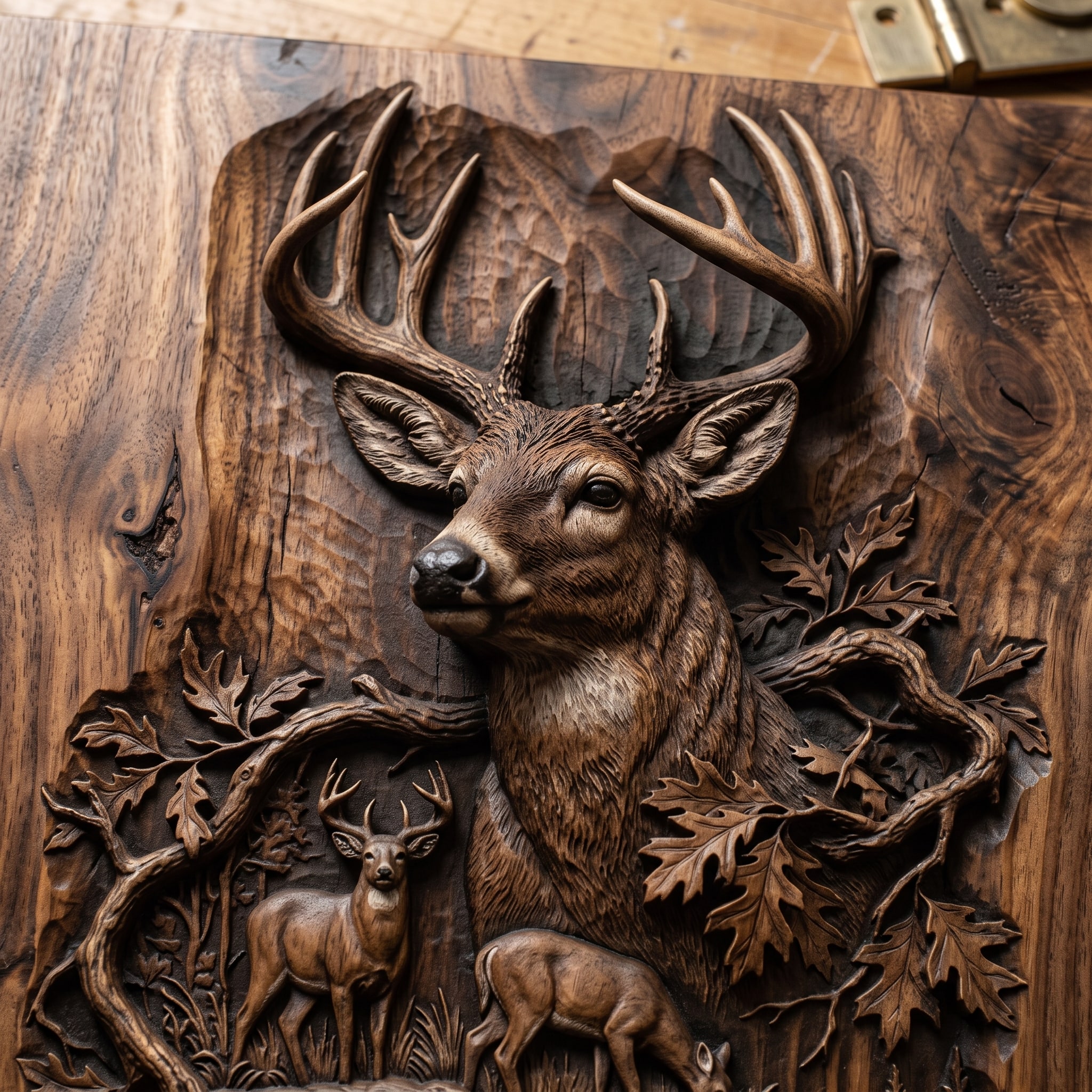
The easiest wood on the list to finish and the most expensive to buy. Walnut is already the colour most people are trying to stain everything else, so it needs no glaze and no stain, just oil, and the recesses go dark on their own. It carves cleanly with a slightly softer feel than cherry and holds detail very well.
- Detail: very good. A touch softer than maple on the finest lines.
- Grain: straight and moderately open; quiet enough that the design wins.
- Blotch: low. Stain is unnecessary anyway.
- Cost: high, and rising. Buy it for the pieces that deserve it.
- Finish: oil and stop. Wax if you want a sheen. The one wood where a beginner cannot get the finish wrong.
Hard maple
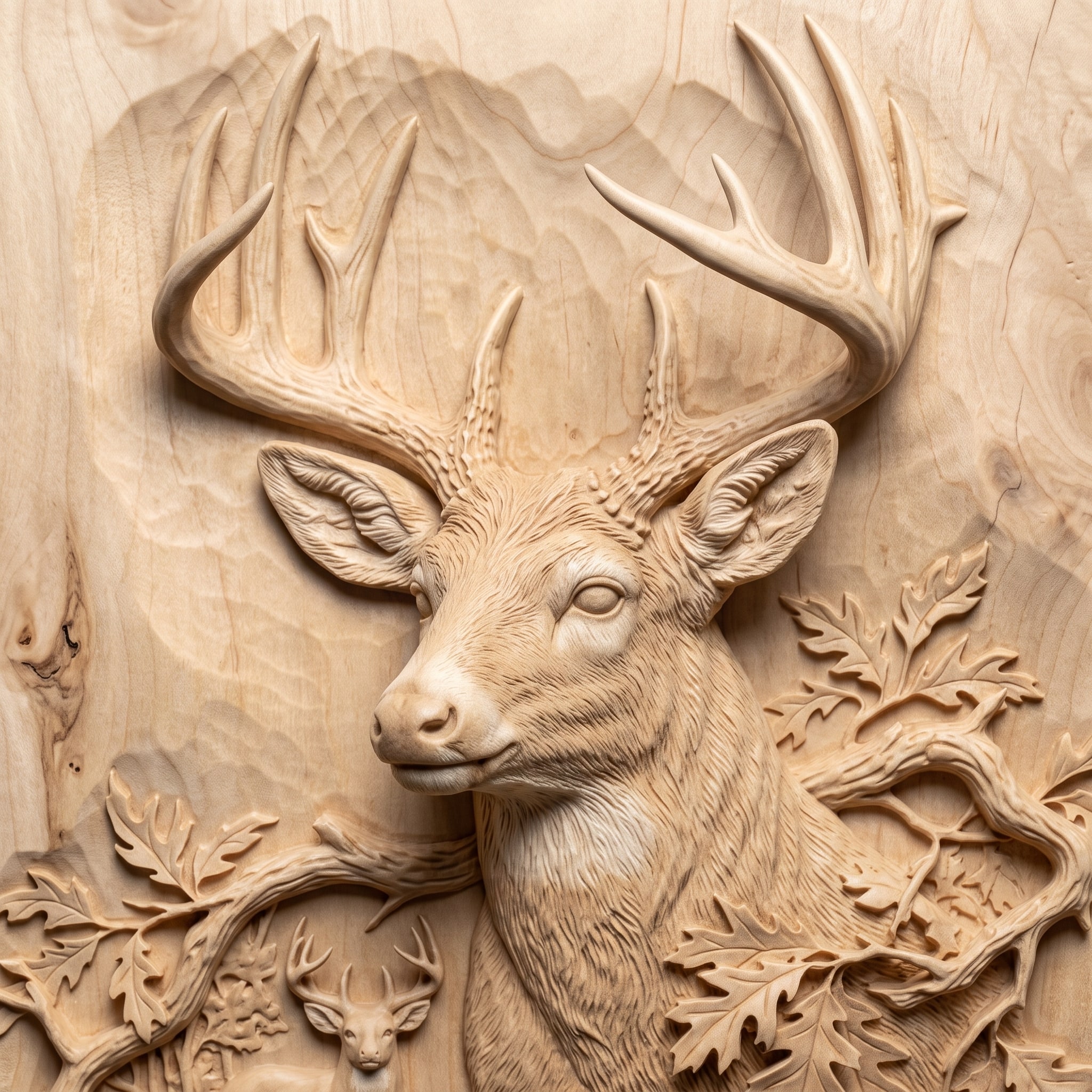
Maple holds the crispest detail of any common species. Every hair line on the buck's neck is there. It is also the hardest wood here, which means slower roughing, faster bit wear, and burn marks the moment a cutter dulls. And it blotches worse than anything else under a pigment stain.
- Detail: the best. Faces, lettering, fine texture.
- Grain: very fine and pale; almost invisible, which is exactly what a portrait wants.
- Blotch: severe. Seal with dewaxed shellac before any colour, or use a dye rather than a pigment stain, or leave it pale and glaze only the recesses.
- Cost: moderate.
- Finish: pale maple with a near-black glaze wiped back is the highest-contrast finish in relief carving. It is also the one that most punishes a lazy sealing step.
Basswood
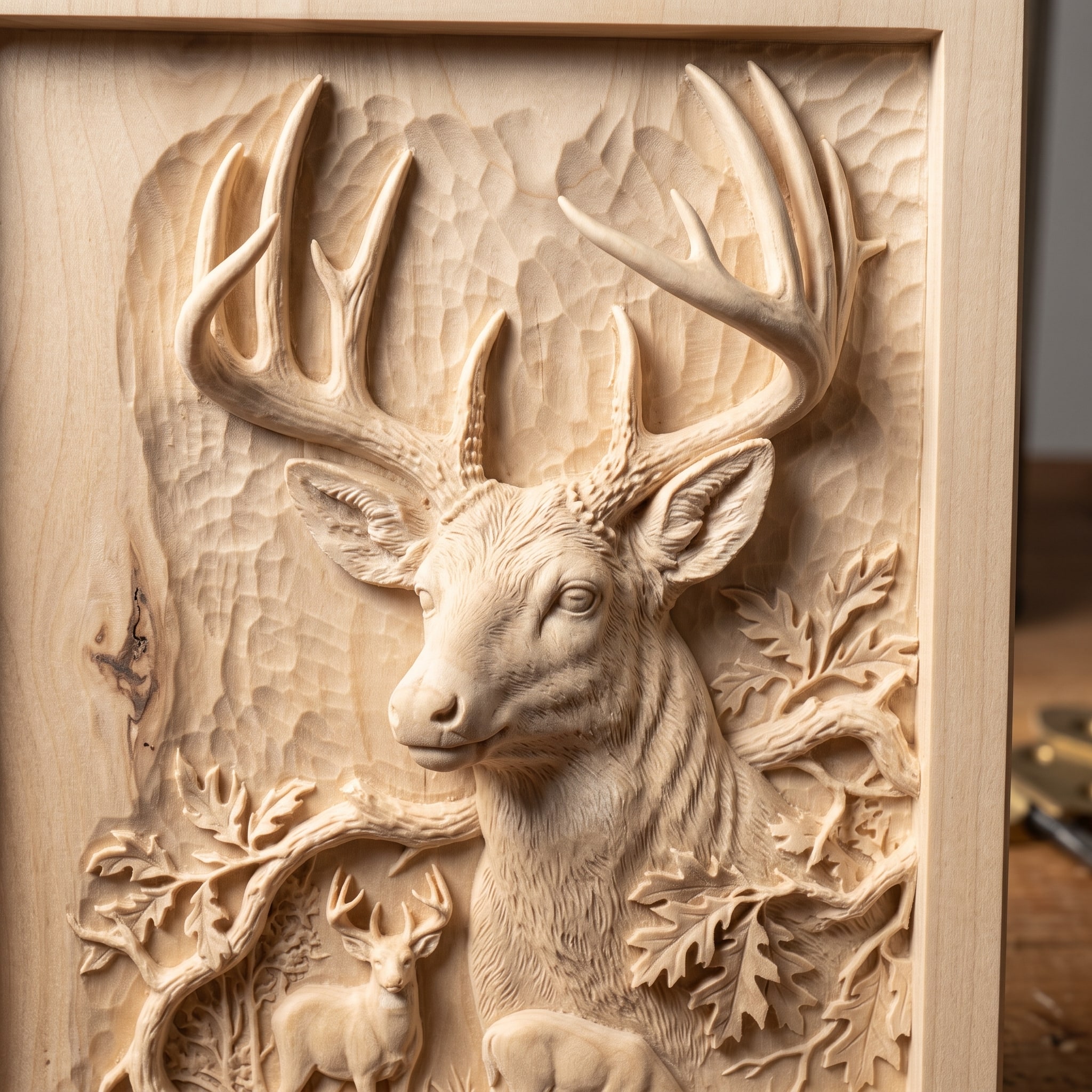
The hand carver's wood, and a good first wood for a CNC too: soft, uniform, cheap, and forgiving of a coarse stepover. The trade is that it is soft enough for the finest detail to crush rather than cut, so edges go slightly fuzzy under a small cutter, and it needs a sharp bit and a brass brush afterwards. It has almost no grain of its own, which makes it the best wood on this list to paint.
- Detail: good, with soft edges on the finest features. Fine for wildlife; less good for small lettering.
- Grain: essentially none. A blank canvas.
- Blotch: high. Always seal before colour.
- Cost: low.
- Finish: paint, milk paint, or seal and glaze. Oil alone leaves it looking a little anaemic.
White oak
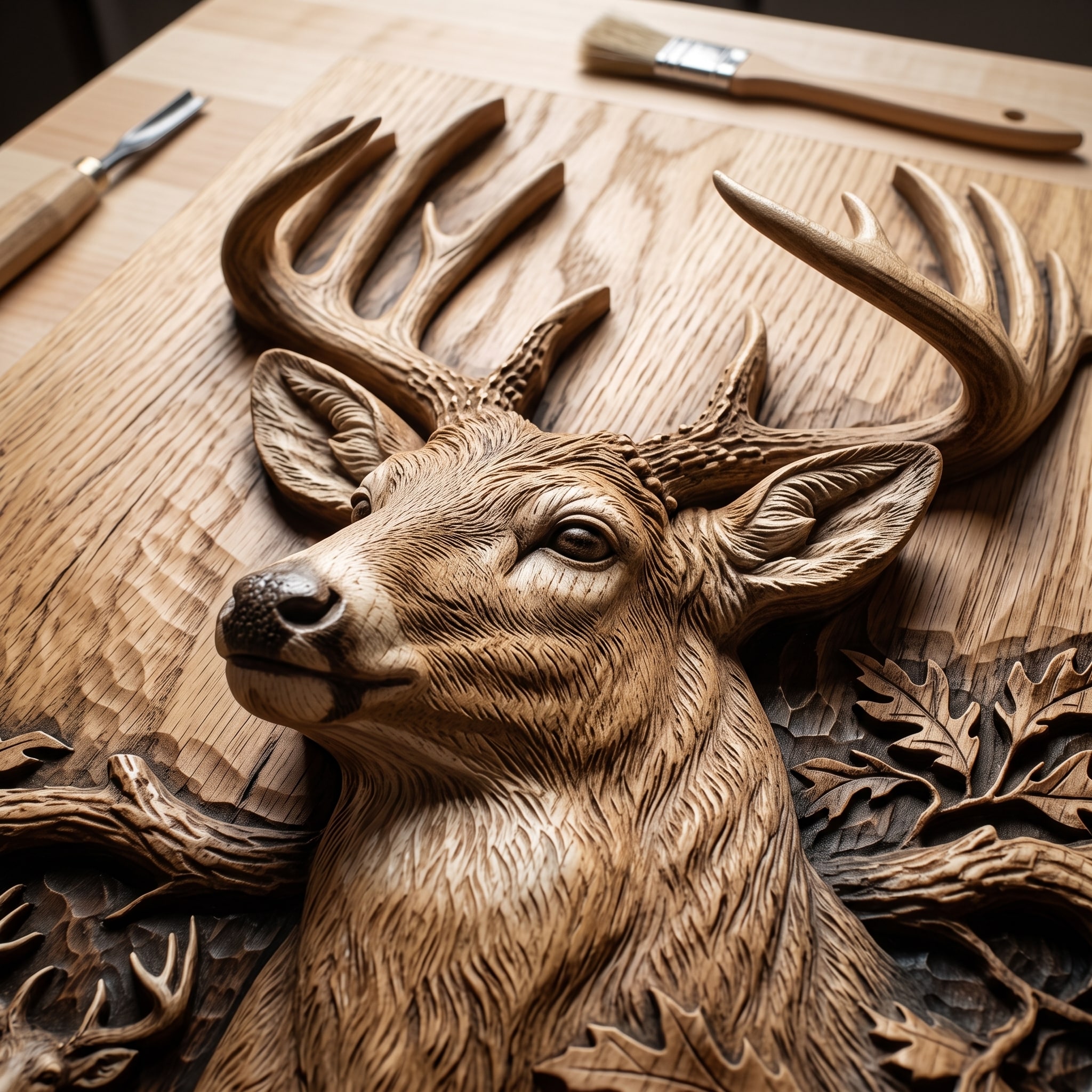
Look at the picture. The grain runs straight through the deer's face, and the ray fleck lays pale stripes across the antlers. Oak is a wonderful furniture wood and a poor relief wood, because its pores are as big as the details you are carving and the pattern is louder than the design. It also carves harder than cherry with more tear-out on steep walls.
- Detail: fair. The pores break up fine lines.
- Grain: loud. The board argues with the carving and usually wins.
- Blotch: low, for what it is worth.
- Cost: moderate.
- Where it works: large, bold designs with big simple shapes, a Celtic knot, a heraldic panel, a barn sign, where the grain reads as character rather than noise. Not faces, not fur, not fine text.
Poplar
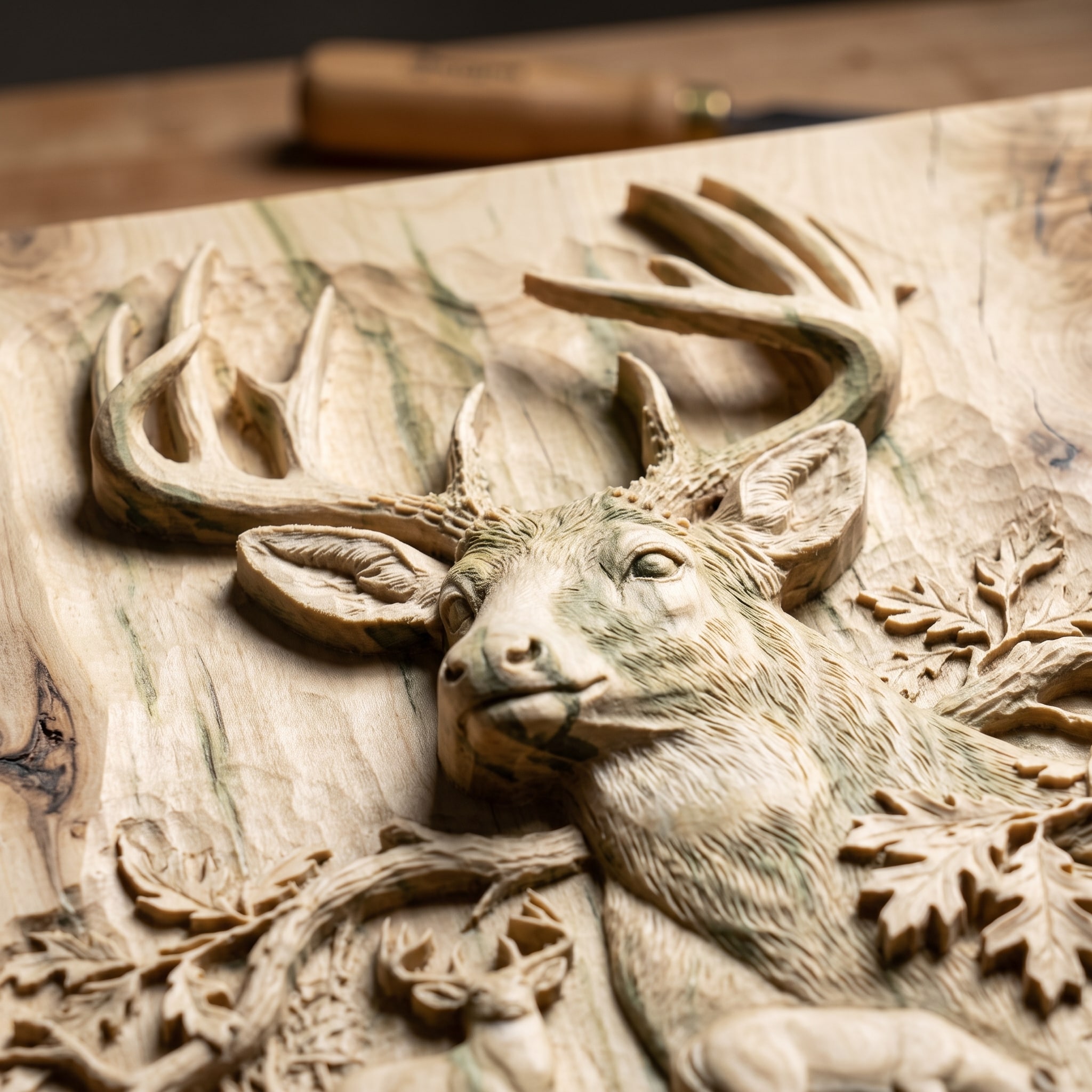
Cheap, widely available, and it carves well, with only a little more fuzz than cherry. The problem is the colour: poplar comes streaked with green and grey that look like bruises under a clear finish, and no amount of oil hides them. Under paint or a heavy dark glaze it is a perfectly good carving wood.
- Detail: good.
- Grain: quiet, but the colour streaks are the issue.
- Blotch: high. Seal before colour.
- Cost: low. The cheapest hardwood at most lumber yards.
- Finish: paint it, or glaze it dark enough that the streaks disappear. Never clear oil.
Sapele
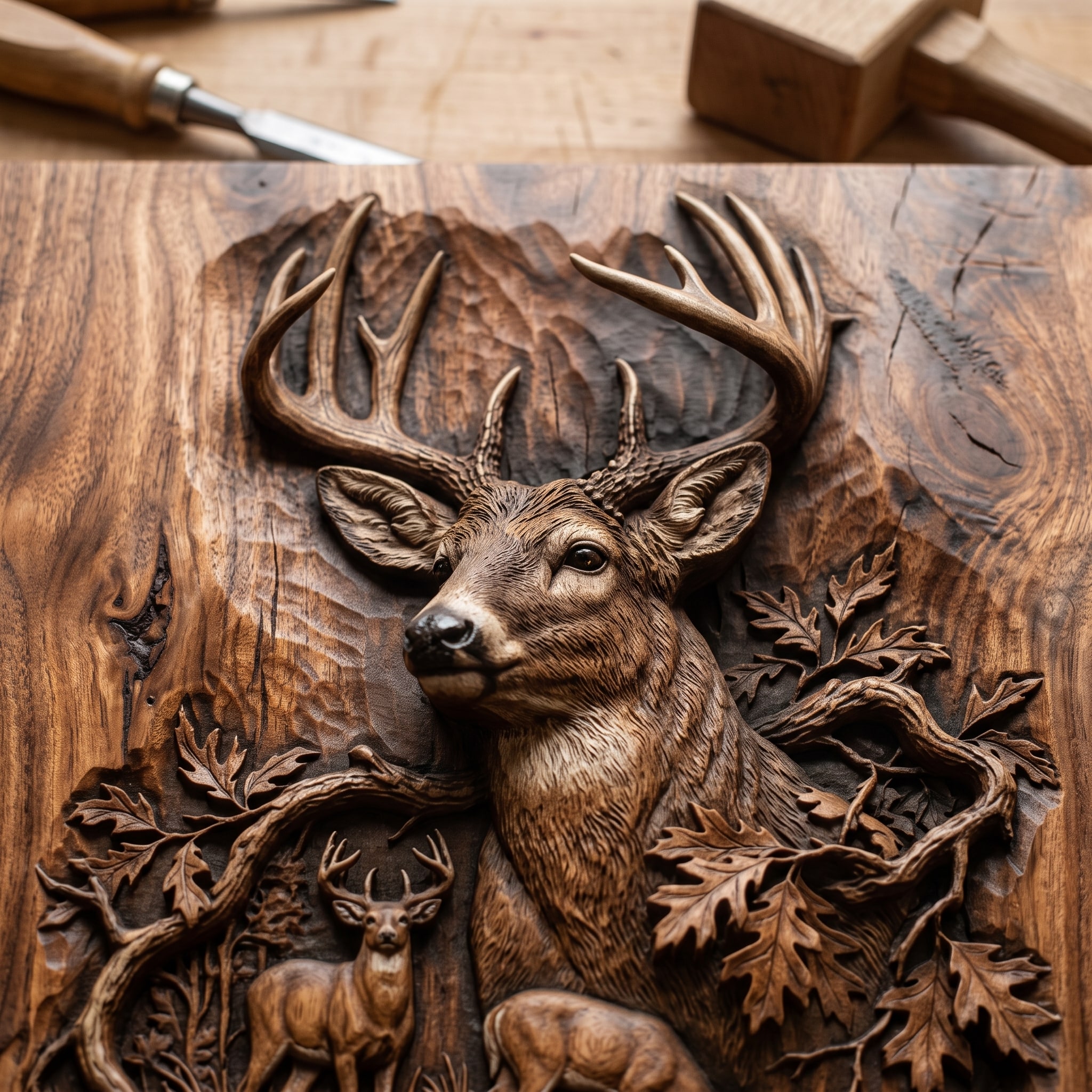
The mahogany substitute, and a very good relief wood in its own right: warm reddish brown, fine texture, and a ribbon-stripe figure that shimmers as you walk past. That interlocked grain is also the catch: on steep walls the cutter alternates between with-grain and against-grain every few millimetres, and a dull bit will tear the against-grain half. Keep the bit sharp and it is superb.
- Detail: very good.
- Grain: fine, with a ribbon figure that adds life without shouting.
- Blotch: low. Oil alone is beautiful.
- Cost: moderate to high, cheaper than walnut in most places.
- Finish: oil; a light glaze in the recesses if you want more contrast.
Pine
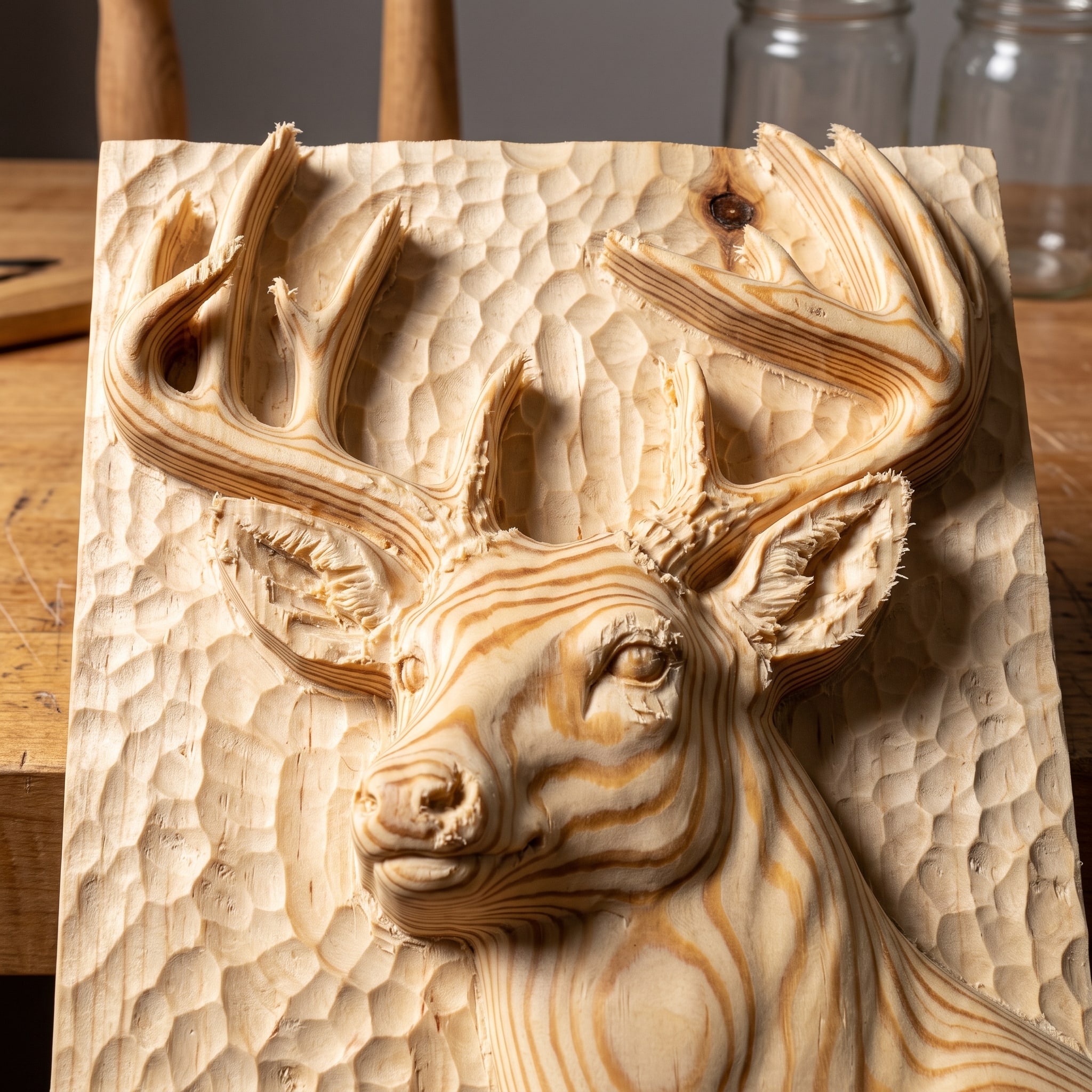
Construction pine is what everyone has in the shop, and it is the worst wood here for relief. The dark growth rings stripe straight through the design, the soft early wood between them tears out and fuzzes, resin pockets reject finish, and it blotches badly under stain. It is fine for a test tile and for practising the workflow. It is not fine for a piece you intend to give or sell.
- Detail: poor. Antler tips and ear edges tear.
- Grain: loud, striped, and soft between the stripes.
- Blotch: severe.
- Cost: the cheapest thing at the store, which is the only argument for it.
- If you must: choose the clearest, tightest-ringed board you can find, seal it heavily, and paint it.
Others worth knowing
- Alder. An underrated middle ground: mild, even, cheap on the west coast of North America, takes colour predictably. Carves like a slightly softer cherry.
- Mahogany (genuine or African). Similar to sapele without the ribbon stripe. Warm, fine, easy.
- Butternut. Walnut's pale cousin: soft, buttery, carves beautifully, and worth buying if you can find it.
- MDF. Takes astonishing detail because it has no grain at all, and it is the cheapest flat material there is. It must be painted, it drinks finish on every cut face, and it cannot get wet. Excellent for painted signs and for a first attempt at a face.
- Baltic birch plywood. The layers show as contour lines in the carving, which some people like as a deliberate effect and everyone else finds distracting. Fine for shallow work; a poor choice for deep relief.
The table
| Species | Holds detail | Grain loudness | Blotch risk | Cost | Best finish |
|---|---|---|---|---|---|
| Cherry | Excellent | Quiet | High | Moderate | Seal, glaze, oil. The default. |
| Black walnut | Very good | Quiet | Low | High | Oil only. |
| Hard maple | Best | Silent | Severe | Moderate | Seal, dark glaze wiped back. |
| Basswood | Good, soft edges | Silent | High | Low | Paint, or seal and glaze. |
| White oak | Fair | Loud | Low | Moderate | Bold designs only; oil. |
| Poplar | Good | Quiet, but streaked | High | Low | Paint or heavy glaze. |
| Sapele | Very good | Figured, pleasant | Low | Moderate to high | Oil. |
| Pine | Poor | Loud, soft between | Severe | Lowest | Test tiles. Otherwise paint. |
Buying boards for carving
- Buy thicker than you think. Relief needs depth plus a floor beneath it; the floor rule means 1 inch stock for most panels and 30 mm or more for trays.
- Flat-sawn is fine; quarter-sawn is quieter. Quarter-sawn boards show straight, tight grain lines that stay out of the way of the design. On oak, quarter-sawn shows ray fleck, which is the opposite of what you want.
- Avoid knots in the carved area. A knot is end grain and it carves like stone in a field of butter.
- Glue-ups work. Two or three narrower boards edge-glued make a wide blank; align the grain direction and keep the joint out of the face if you can.
- Let it acclimatise. A board from a cold warehouse into a warm shop will move for a week. Carve a moving board and it cups around the relief.
The design in every photograph is the Whitetail Buck and Forest Scene Bas-Relief STL Carving, our most carved file of the year and a good one to test a new species on, because it has a face, fur, antler tips and a textured background all in one panel.
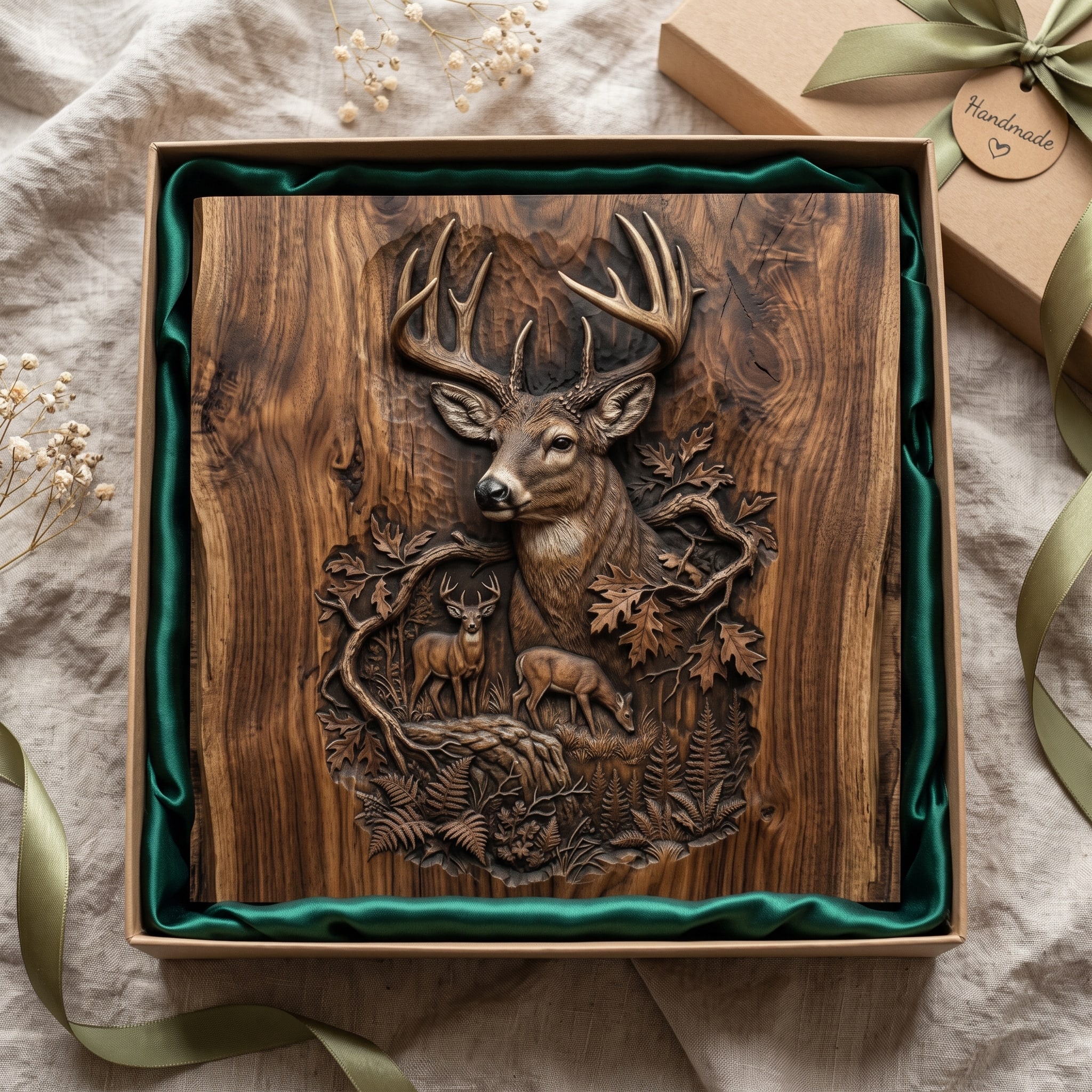
Download the Whitetail Buck panel · $11.99
Questions people ask
What is the best wood for CNC relief carving?
Cherry, for detail, price and finish together. Hard maple if the piece is a face or lettering and you will seal it properly. Walnut if you can afford it and want the easiest finish of all.
Is oak good for relief carving?
Only for bold, simple designs. Its open pores are as large as fine detail, and its grain pattern competes with faces and fur.
Can I carve reliefs in pine?
For practice and test tiles, yes. For a finished piece, no: it tears out, stripes, and blotches.
Which wood is best for a beginner?
Basswood for the very first carve, because it is soft and forgiving, then cherry for everything after.
Which wood holds the most detail?
Hard maple, followed by cherry and sapele. Maple's price is that it blotches under stain and burns under a dull bit.
Does the wood change how I should finish?
Completely. Walnut needs oil only; cherry, maple, basswood and poplar must be sealed before any colour; oak and pine want bold or painted treatments. The finishing guide has the schedule for each.
Eight boards, one file, and the answer most guides give turns out to be right for a reason you can now see: cherry and walnut are quiet, fine, and kind to a cutter. Maple is the specialist's choice. The rest are for specific jobs, or for learning on. Pick the board for the piece, not for the price tag, and the carving will show it for decades.
Jolly, DigitalChiselCo